5 Evidence-Based Exercises to Improve Balance and Prevent Falls in Older Adults
Why balance training matters
Falls are the leading cause of injury in older adults and can dramatically affect independence and quality of life. Targeted balance and strength training reduces fall risk, improves confidence, and supports everyday activities such as climbing stairs and carrying groceries. Below are five practical, evidence-based exercises you can do at home — each one intentionally chosen for safety, progression, and functional benefit.
How to use these exercises
Start with 2–3 sessions per week. Use a chair or wall for support during early progressions and work with a coach if you have recent falls, dizziness, or medical concerns. Aim for 8–12 repetitions for strength-focused moves and 30–60 seconds for balance holds. Progress when you can complete the set comfortably and without losing form.
1) Sit-to-Stand — builds functional leg strength
Why: Mimics daily tasks and improves hip/knee strength and balance.
How: From a chair, stand up slowly using leg strength (avoid pushing with hands). Sit back down with control.
Progressions: Start with hands on chair → hands on thighs → no hands → slow eccentrics (3–5 sec down).
Benefits: Transfers directly to safer transfers and stair negotiation.
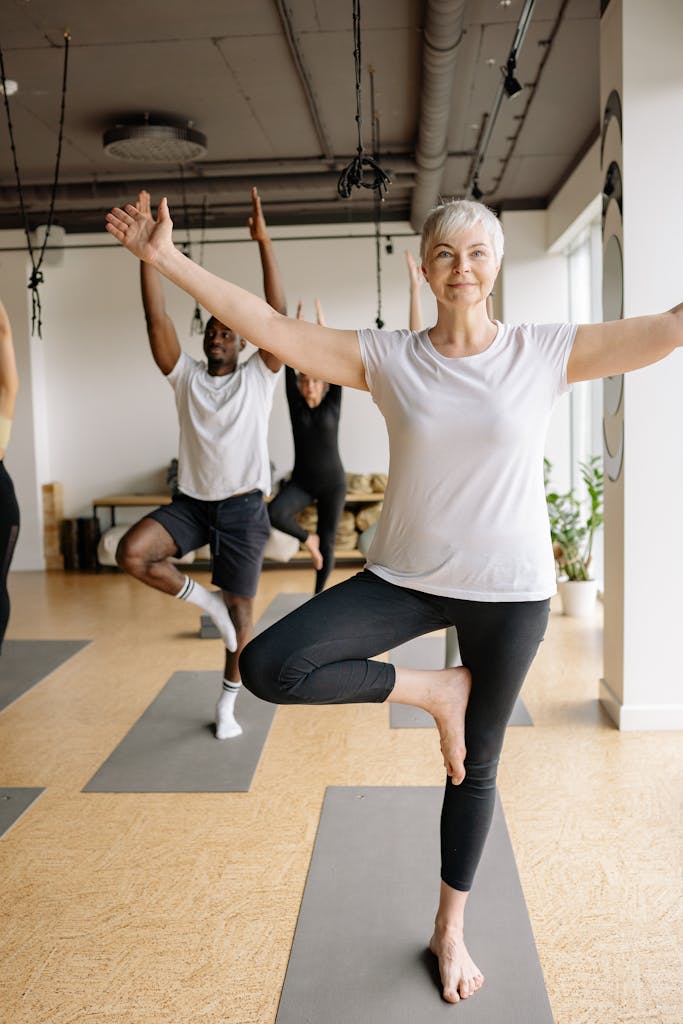
2) Single-Leg Balance — trains unilateral stability
Why: Improves proprioception and reduces asymmetry.
How: Stand near a chair, lift one foot a few inches off the floor, hold for 10–30s. Use a finger-tip touch for safety.
Progressions: Increase hold time, close eyes to challenge sensory systems, or add gentle head turns.
Tip: Perform next to a rail for confidence.
3) Heel Raises — targets ankle strategy and calf strength
Why: Strong calves and ankle proprioception are essential for balance recovery.
How: Stand tall, rise onto toes, hold 1–2s, lower slowly. 10–15 reps.
Progressions: Single-leg heel raises or slow eccentrics to build tendon resilience.
4) Side-Step and Lateral Lunge — improves lateral stability
Why: Many falls occur sideways; lateral strength supports better step reactions.
How: Step laterally, push off the planted foot, return. Or perform shallow lateral lunges with controlled depth.
Progressions: Add resistance bands or increase step distance.
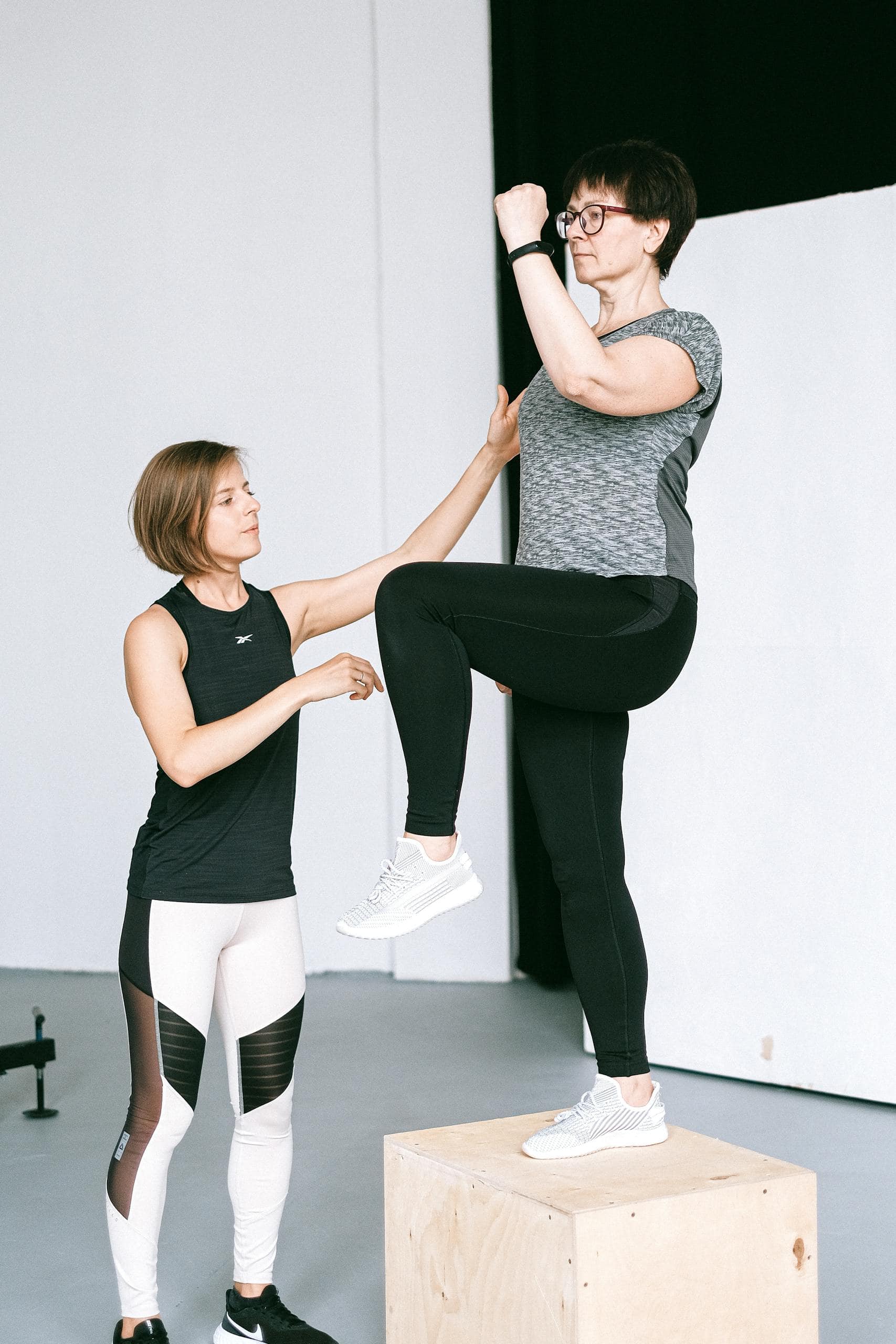
5) Marching with Arm Swing / Dual-Task Drills — trains balance under cognitive load
Why: Real life requires attention. Combining movement with simple cognitive tasks (counting backwards, naming words) improves dual-task capacity and reduces fall risk.
How: March in place for 30–60s while reciting categories (fruits, provinces, etc.).
Progressions: Increase march intensity or complexity of tasks.
Safety & When to Seek Help
- Stop if you feel lightheaded, dizzy, or experience sharp pain.
- If you’ve had recent falls, see your physician or physiotherapist before starting.
- Work with a coach for personalized progressions and home safety checks.
- Vestibular dysfunction (vertigo) should be screened and treated by a specialist.
Related exercises & tools
Resistance bands, a stable chair, and a small balance pad are inexpensive and effective tools for home practice. Shoes with a low, stable heel and non-slip soles improve safety.
Staying Strong, Safe, and Independent as You Age
Staying active as we age doesn’t require intense workouts or gym environments. With the right guidance, strength and balance training can safely support mobility, confidence, and independence well into later years.
If you or a loved one are looking for a structured, supportive, and evidence-based approach, DangFit offers personalized in-home and virtual senior training designed to meet you exactly where you are.
Related services: Senior & Older Adults Training | In-Home Personal Training